When the Shoulder Slips: A Common Injury Weekend Warriors Shouldn’t Try to Fix Themselves
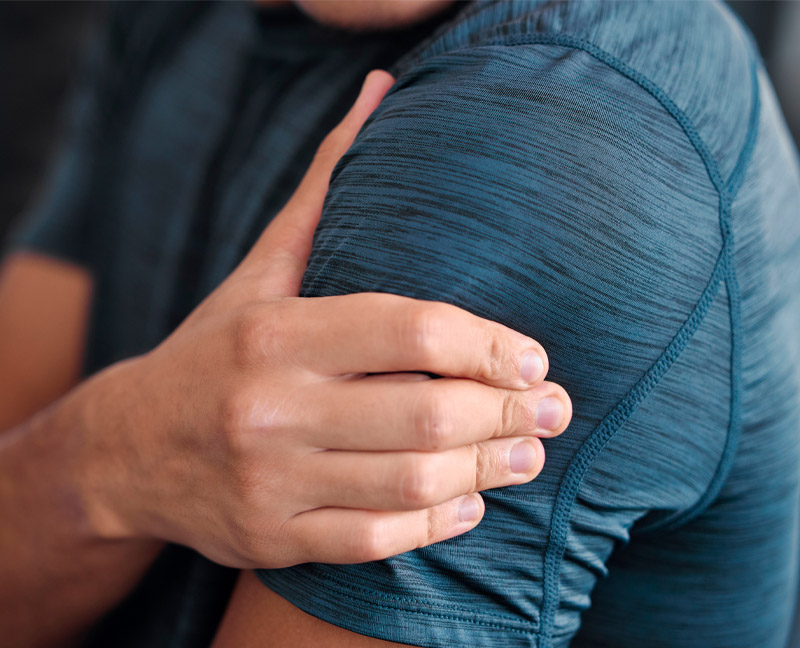
You don’t have to be a professional or Olympic athlete to suffer a dislocated shoulder. In fact, many of these injuries happen to “weekend warriors” and during everyday activities—playing pickup sports, slipping on ice, bracing a fall, or even walking a strong dog that suddenly pulls in the wrong direction.
According to Dr. Tuan “Mickey” Bui, Orthopaedic Surgeon with Shore Physicians Group, the shoulder is particularly vulnerable because of how it’s designed. “The shoulder has more motion than any other joint in the body,” he explains. “It’s a ball-and-socket joint, but the socket is very shallow, which makes it less stable.”
That incredible range of motion allows us to lift, reach, and rotate our arms freely—but it also means the shoulder is easier to dislocate. A dislocated shoulder occurs when the upper arm bone pops out of the socket, most often when the arm is forced away from the body. Dr. Bui says this commonly happens when people brace themselves during a fall or when the arm is suddenly pulled backward or to the side. This can be during sports, or even just falling down, especially down the stairs when a handrail is grabbed.
These injuries aren’t subtle. “It hurts—a lot,” Dr. Bui says. “Your arm feels dead. You can’t move it, and visually, the shoulder doesn’t look the same on both sides.” Often, the affected shoulder appears flattened, and the person instinctively holds their arm still because movement causes intense pain.
Two important structures help keep the shoulder in place: the labrum and the rotator cuff. The labrum is a ring of soft tissue that surrounds the socket. Dr. Bui uses an easy analogy to explain its role. “Think of the labrum like the rim of a dinner plate,” he says. “Without that rim, everything just slides right off.” When a shoulder dislocates, the labrum often tears, making the joint less stable and increasing the risk of future dislocations.
Despite how painful shoulder dislocations are, one common mistake people make is trying to “pop” the shoulder back in themselves. While trained medical professionals can safely perform a controlled maneuver called a reduction, attempting this without proper training can do harm than good.
“If you don’t know what you’re doing, you can damage the shoulder further,” Dr. Bui warns. Improper attempts can worsen labrum tears, injure nerves or blood vessels, or make an undetected fracture much worse. That’s why reductions should be left to professionals in emergency or sports medicine settings.
Treatment doesn’t end once the shoulder is back in place. Recovery typically involves a sling, rest, and physical therapy. Younger patients may recover with rehab alone, while older adults are more likely to suffer rotator cuff tears during a dislocation—injuries that often require surgery.
The bottom line: dislocated shoulders are common, painful, and serious. Whether the injury happens on a court, in the yard, or during a simple fall, resisting the urge to fix it yourself and seeking expert care is the safest way to protect your shoulder for the long run.
Dr. Tuan “Mickey” Bui treats patients at Shore Physicians Group’s Orthopaedic Division offices located at 710 Centre Street, 2nd Floor in Somers Point, NJ. To schedule an appointment with Dr. Bui, call 609-365-6280.
