Can’t Lay Your Hand Flat? It Could Be Dupuytren’s Contracture
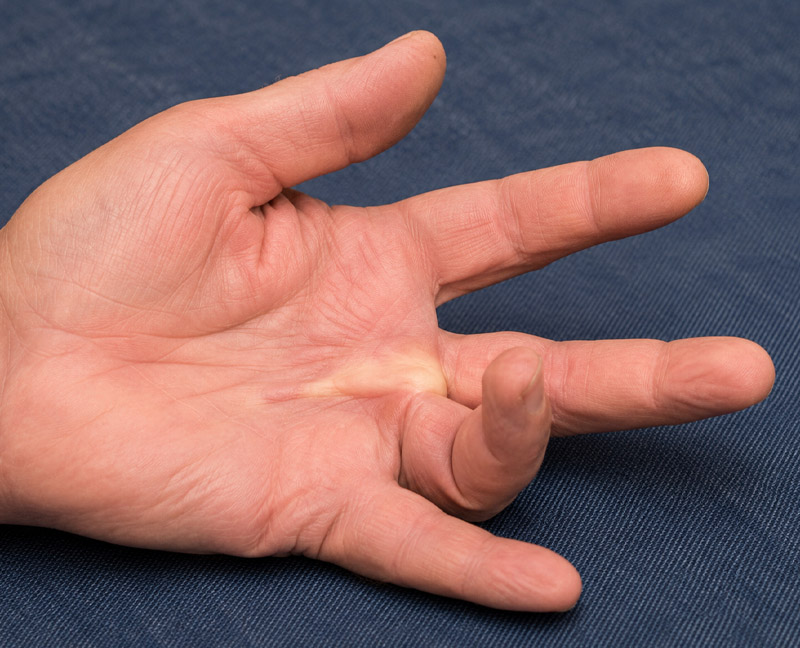
For many people, changes in their hands happen so gradually that they are easy to overlook until everyday tasks become more difficult. That is often the case with Dupuytren’s contracture, a condition that affects the tissue beneath the skin of the palm. To better understand the condition, Dr. Jasmine Bauknight, a hand surgeon with Shore Physicians Group Orthopaedic Surgery Division located at 710 Center Street in Somers Point, explains that Dupuytren’s contracture affects the tissue beneath the skin of the palm and can gradually change how the hand functions over time.
Dupuytren’s contracture is a progressive condition in which the fascia, the thick connective tissue in the palm, begins to abnormally thicken. Over time, this can form firm nodules and rope like cords beneath the skin. “Patients often first notice a small bump or puckering in the palm,” Dr. Bauknight explains. “As the condition progresses, those cords can thicken and start pulling the fingers down toward the palm.”
In Dupuytren’s disease, the ring and small fingers are most commonly affected. While the condition is typically not painful, it can significantly impact hand function. As the fingers become more bent, simple activities like putting on gloves, reaching into a pocket, or even washing your face can become challenging and frustrating.
Dupuytren’s contracture is believed to have a genetic component and is more common in individuals of Northern European descent. It also tends to appear later in life, often in men in their fifties and women in their sixties. However, Dr. Bauknight notes that earlier onset can indicate a more aggressive form of the disease that progresses more quickly.
One of the most important things for patients to understand is that not every case requires immediate treatment. “If you just have a small nodule or mild cord and your hand is still functioning well, we typically monitor it,” she says. “Intervention is usually recommended when the fingers can no longer fully straighten and it starts interfering with daily activities.”
When treatment is needed, there are a few options. Surgical removal of the diseased tissue is one approach, carefully separating the diseased cords from nearby nerves and blood vessels. Another option is a minimally invasive injection using an enzyme that breaks down the collagen in the cord, allowing the finger to be straightened and improving mobility and function.
It is also important to know that Dupuytren’s contracture is a chronic condition. “No matter what treatment you choose, it can come back over time,” Dr. Bauknight says. “The goal is to improve function and quality of life.”
If you notice changes in your hands such as lumps, tightening, or difficulty straightening your fingers, it is worth having it evaluated. Early awareness can help you better understand your options and plan ahead with confidence.
To schedule an appointment with Dr. Bauknight, call 609 365 6280.
